

Building a Standard
Every baseball organization eventually develops an identity.
Some are known for winning. Others become known for producing talent. The best organizations, though, build something that lasts longer than a single season. They establish a standard—one that every player, coach, intern, and staff member experiences the moment they walk through the gates.
After spending the first half of the Northwoods League season around the Royal Oak Leprechauns, I’ve become convinced that’s exactly what manager DJ LeMahieu is building.
Not through speeches, not through motivational quotes. Through example.
If you arrive at Stevens Complex early enough, chances are you’ll find DJ already there. Before the first player begins stretching or the first coach grabs a fungo, he’s already working. One morning he might be hitting ground balls to the infielders, talking through footwork around the bag or explaining why one angle is better than another. The next day he’s feeding baseballs into the machine during batting practice, flipping in the cage, or walking hitters through game situations between rounds.
There isn’t much he won’t do.
That’s what has impressed me most.
For fourteen seasons in the Major Leagues, fans saw the polished version of DJ LeMahieu. They saw the batting titles, the Gold Gloves, the All-Star appearances, and one of the most fundamentally sound infielders of his generation. What they didn’t always see were the habits that created that player in the first place.
Now those habits are on display every day in Royal Oak. And the players notice.
College athletes are incredibly perceptive. They know when a coach is simply collecting a paycheck, and they know when someone is fully invested in their development. Watching DJ work in ninety-degree heat alongside them—not above them—creates credibility that simply can’t be manufactured.
Professionalism has a way of becoming contagious.
The first-half record probably wasn’t everything DJ envisioned when the season began, but judging this summer solely by wins and losses would completely miss what has been taking place behind the scenes.
For many of these players, this has been their first exposure to something resembling professional baseball.
They’re learning to play seventy-two games in seventy-six days, learning to recover after overnight bus rides and how to prepare when they’re tired.
They’re learning that showing up every day with the same focus and attention to detail is often more difficult than performing when you feel fresh. Those lessons don’t always show up in a the win and loss column, but they’re often the ones players carry with them long after the summer ends.
Building a Community
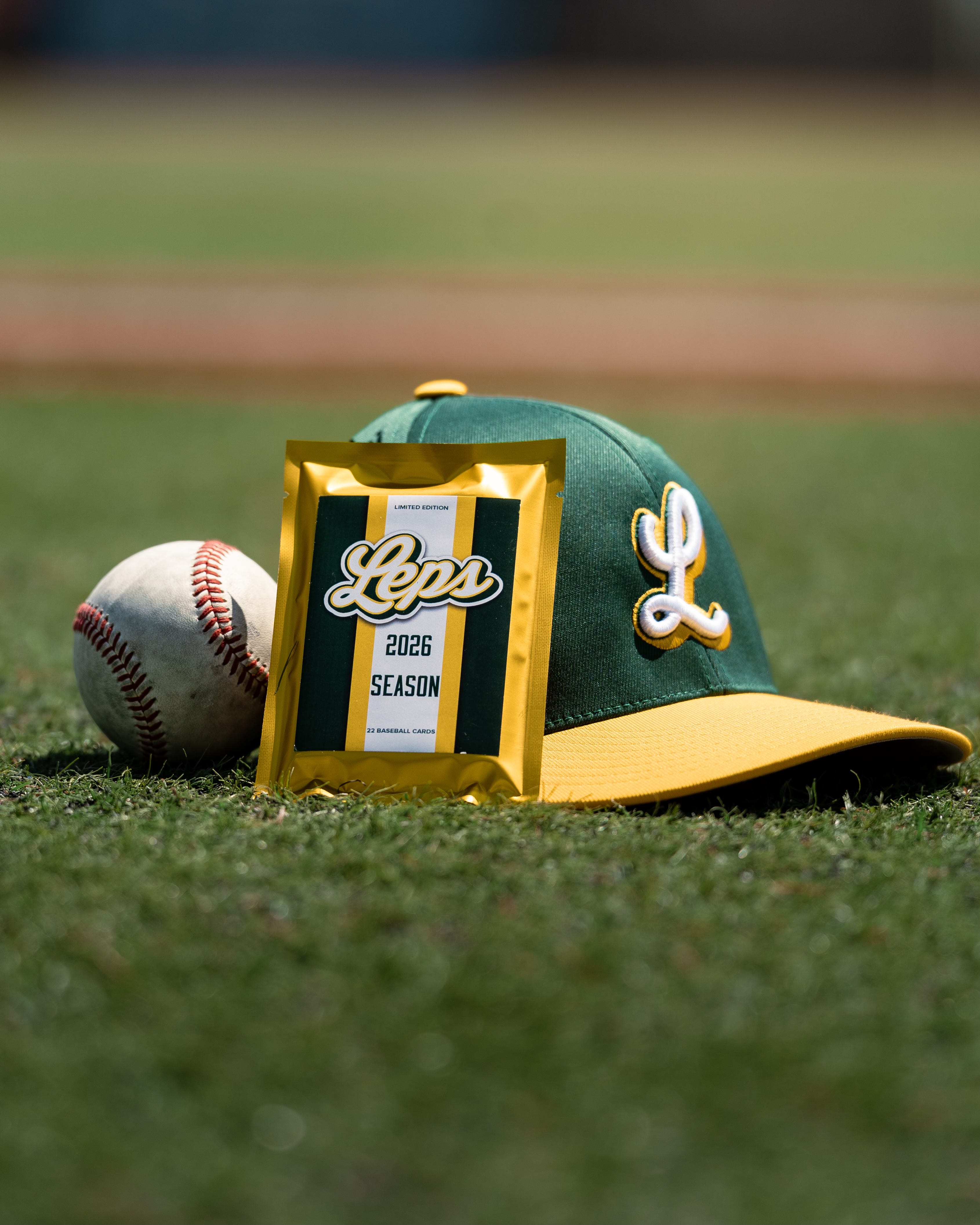
One of my favorite moments from the first half didn’t happen during a game, instead it happened when the Leprechauns unveiled their inaugural 22-card team set.
As someone who spent years building Cards & Culture, I probably looked at that announcement a little differently than most people. Baseball cards have never really been about cardboard. They’re about connection. They’re the autograph a kid gets after the game, the memory tucked away in a binder for years, and sometimes the first tangible reminder that they watched a future professional player before anyone else knew his name.
That’s why I loved this project.
Credit belongs to interns Cameron Schaefer and Casey Burke, who helped bring the inaugural set to life. On the surface, it’s a promotional giveaway. In reality, it’s another investment in the fan experience and another way of strengthening the relationship between this team and the Royal Oak community.
The best organizations understand that people don’t simply fall in love with wins.
They fall in love with experiences.
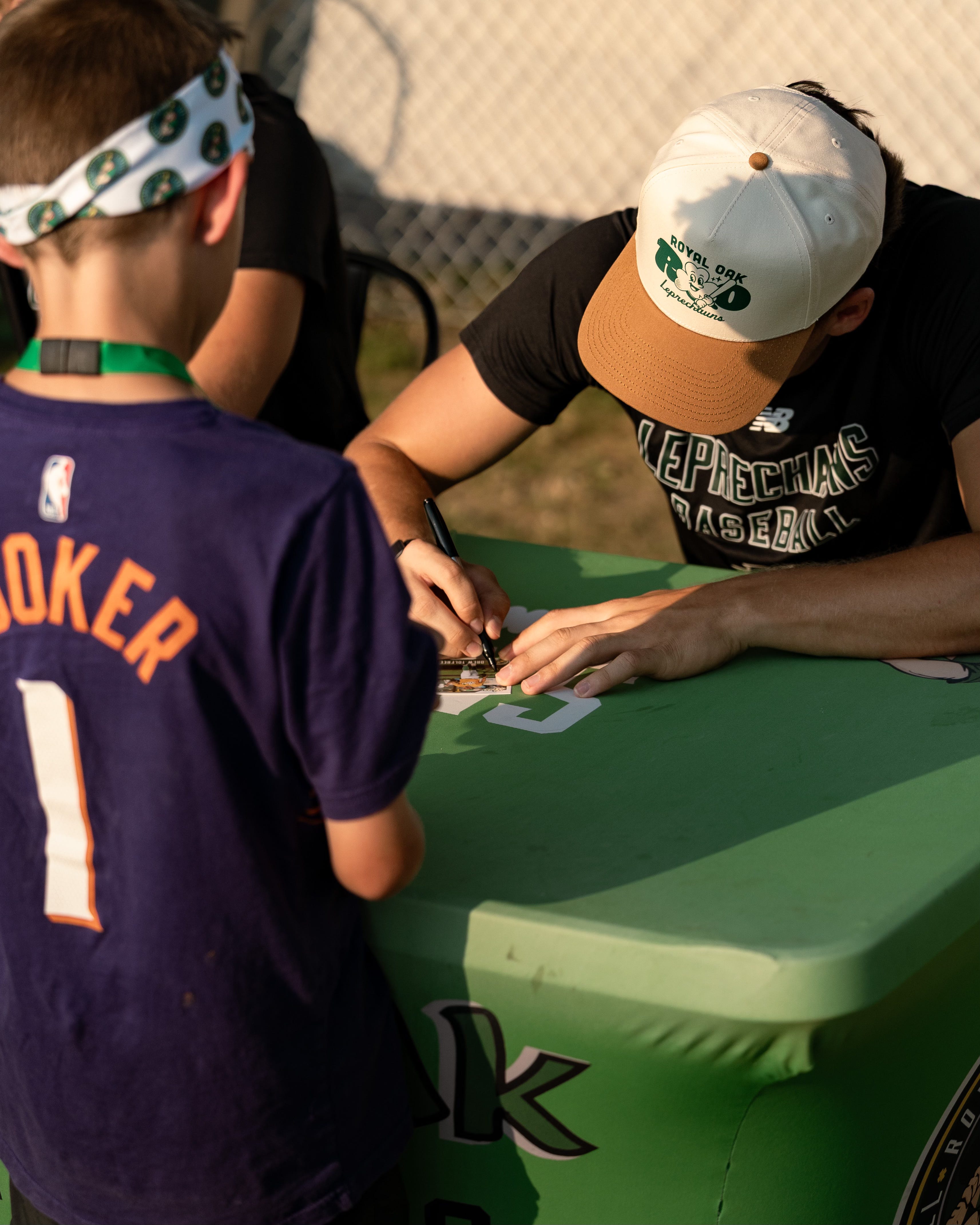
A child who leaves Memorial Park with a signed team card may not remember the score five years from now, but there’s a good chance they’ll remember the player who took an extra minute to sign it.
That’s how communities are built.
A Summer of Growth
The baseball itself has been impressive, too.
Three Leprechauns earned Northwoods League All-Star selections, and each represents a different part of what this organization is becoming.
Kellen English has been one of my favorite players to watch since Opening Day. At 6-foot-10, he immediately commands your attention, but it isn’t just the frame that stands out. His fastball has climbed into the mid-90s, his cutter continues to improve, and the athleticism he possesses for someone his size creates enormous upside.
He’s the type of pitcher scouts dream about because there simply aren’t many athletes built like him.
Whether his future includes Team USA, the Cape Cod League, or professional baseball remains to be seen, but it’s easy to understand why evaluators are intrigued every time he steps on the mound. Watching him reminded me of Andrew Brackman or Ryan Doherty, two other 6’10” MLB arms whose ceiling generated as much conversation as anyone’s.
Oliver Service earned his All-Star selection for a different reason. The statistics speak for themselves, but one comment from DJ LeMahieu has stuck with me all summer.
“He has a professional swing.”
That’s not praise that gets handed out lightly. Service consistently produces quality at-bats, drives the baseball to all fields, and has shown the type of offensive approach that should make him an exciting player to follow next spring. It’ll be fascinating to watch where next year’s draft process takes him.
Then there’s Luke Kosko.
If you’ve read these reports throughout the summer, you already know how highly I’ve thought of him.
I’m still not sure I’ve found the perfect player comparison, and maybe that’s a good thing. Sometimes we become so focused on finding comparisons that we forget to simply appreciate what we’re watching.
Kosko has become one of the most dangerous hitters in the Northwoods League, combining power, athleticism, patience, and the ability to impact a game in multiple ways. Whether he’s driving the baseball into the gaps, launching home runs, drawing walks, or creating pressure on the bases, he seems to find another way to contribute almost every night.
He’s the kind of player you make a point to watch whenever he’s in the lineup.
The Pipeline Is Working
One of the themes we’ve returned to throughout these reports is that summer baseball isn’t just about today’s standings.
It’s about tomorrow’s opportunities.
This summer alone, several Leprechauns have announced commitments to Division I programs through the transfer portal, continuing their development at the next level. Former Leprechauns Brayden Dowd and Tyler Kapa heard their names called during the MLB Draft, while other alumni have continued signing professional contracts and beginning the next chapter of their careers.
That’s exactly what this league is designed to do.
Every summer, players arrive in Royal Oak hoping to improve. Some are chasing bigger schools. Others are chasing professional baseball. Many are simply trying to prove they belong.
The Leprechauns have become another stop along that journey.
Looking Ahead
The first-half roster will eventually change.
Some players will head back to campus. Others will move on to different summer opportunities. New faces will arrive, bringing new personalities and new stories.
That’s the rhythm of the Northwoods League.
The standard, however, shouldn’t change.
After spending the first half around this club, that’s what leaves the strongest impression. It’s not a batting average or an ERA. It’s watching a fourteen-year Major Leaguer show up before everyone else, work alongside college players without asking for recognition, and quietly demonstrate what professionalism looks like every single day.
Culture isn’t built overnight.
It isn’t created with one winning streak or one recruiting class.
It’s built through hundreds of ordinary days where the people leading an organization choose to do ordinary things extraordinarily well.
That’s the feeling I leave with after the first half of the season.
The wins will come. Players will move on. New talent will arrive.
If the standard remains the same, though, the future of baseball in Royal Oak looks incredibly bright.